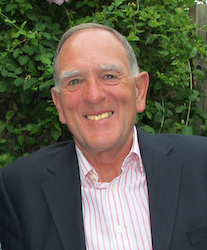
 Malcolm Alexander was raised in North London, attending University College School in Hampstead. Holidays in rural Norfolk with his great-uncle Claude led to a degree in agriculture at Wye College, University of London. After marrying Hélène, they lived in a remote part of Uganda, where they supported school-leavers in planting tea, before spending three years in Malawi planning agricultural projects.
Returning to London as a qualified accountant, Malcolm took on senior management roles in the tea industry with Brooke Bond and in international drinks marketing, before establishing Interregna to provide management talent to fill gaps in organisations.
Over the last decade, Malcolm has devoted time to research and writing. His first biography, Ulendo: Claude’s African Journey into War and Passion, was published by Aldridge Press in 2018. Archbishop Tutu wrote, ‘On every page … is the sense of place, time, and emotion that can only come from a love of the continent and its people.’
Malcolm’s second book, Alec: The Father I Barely Knew was published by Inter/Connexions Press in October 2025. Malcolm never really knew his father, he died when he was eight. Although the news was devastating and unbelievable, true to the spirit of the time, life carried on.
Just before marrying and embarking on a new life in Africa, Malcolm discovered his father, Alec, had a life and a family he knew nothing about. Researching this story has taken him on a challenging journey into the life of a father who demonstrated both leadership and perseverance, but faced with a moral dilemma in his fifties, chose love over duty.
When not at his desk, Malcolm plays tennis and is passionate about cricket.
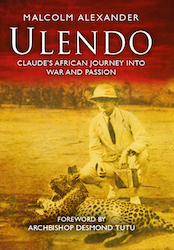 Ulendo: Claude’s African Journey into War and Passion
Ulendo: Claude’s African Journey into War and Passion – A History of Empire seen through the Life of Claude Oldfield (1889-1963) British Colonial Officer, Northern Rhodesia
In 1983, Malcolm Alexander was given the photo albums of his great-uncle Claude, a colonial officer in Africa from 1911 to 1932. Ulendo – going for a walk in the bush – is a quest for this elusive man in the vanished world of the British Empire, the story behind those captivating old photographs.
When Claude arrived, beautiful Northern Rhodesia was a new colony and Malcolm explains its origins in Livingstone’s missionary zeal and Rhodes’ rapacious ambition. Three years later, Claude was on the front line in the brutal and highly mobile Africa campaigns of World War One, vividly narrated here. Having received the German surrender in 1918, Claude resumed his administrative work among Africans, missionaries and eccentrics – and became involved in a passionate love affair.
After Government cut-backs imposed early retirement and a return home, Claude met a young single woman and was again on active service as an RAF ground officer in the defence of London. During Claude’s lifetime, the ‘wind of change’ was already blowing and Northern Rhodesia became independent Zambia soon after his death.
As Archbishop Tutu writes in his foreword: ‘Malcolm has captured the bitter-sweet feeling that loving Africa engenders. … At this moment, when we are re-examining the legacy of empire, it is imperative that we try and look again at what was driving people. Malcolm gives us that perspective.’
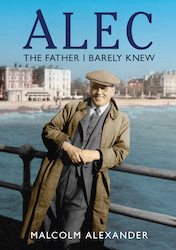 Alec: The Father I Barely Knew
‘Alec: The Father I Barely Knew; is a moving, meticulously researched memoir and biography tracing the life of a remarkable but enigmatic figure – Frederick Percival Jarrett Alexander, known as “Alec”, as viewed through the eyes of a son seeking connection, understanding, and closure.
Malcolm Alexander’s father, Alec, died when Malcolm was eight years old, leaving huge gaps and unanswered questions in the author’s childhood. Decades later, a chance comment by his mother set Malcolm on an unexpected journey, working through old family secrets, distant connections, and the evolving moral landscape of 20th-century Britain. What began as an intensely personal quest became a broader investigation into family, memory, and the cultural forces shaping identity.
The narrative traces Alec’s trajectory from a disrupted Victorian childhood through to remarkable achievements in the heart of Edwardian London’s financial world. Alec successfully floated a major insurance company on the London Stock Exchange shortly after the First World War, only to have his high-flying career derailed by one of the era’s most notorious financial scandals. Afterwards, he reinvented himself as a hotelier on the English south coast, becoming a respected civic leader in Worthing and later contending with the personal and social upheavals of depression, war, and changing times.
Alexander’s account is unflinching in its exploration of family secrets and “skeletons in the cupboard”. Alec’s complex private life – marked by a long-hidden first marriage, a large age gap with his second partner, issues of illegitimacy, and the pain of family separations – mirrors the untold stories in many families, handled with honesty and compassion. The narrative expands to reveal the fates of siblings, half-siblings, and earlier generations, uncovering waves of emigration, social aspiration, resilience, and love.
Woven throughout is the story of Britain itself, from the optimism of the post-World War I boom and the class mobility of the Edwardian era, through to the trauma and social change of the interwar years, World War II, and the postwar welfare state. The book is enriched with evocative details of everyday life, from caravan holidays and schooldays to the rituals of Freemasonry and the grandeur of Livery dinners. Alexander vividly recreates the emotional texture of the times, and the book includes photographs, letters, and maps that further bring the story to life.
‘Alec: The Father I Barely Knew’ is both a moving memoir and a masterclass in social history, offering honesty, empathy, and wisdom for anyone interested in family, generational legacy, and the quest to understand those who came before us. It will appeal to readers of biography, memoir, modern British history, and those curious about how the past shapes our sense of self. As Trevor Thamsanqa Tutu writes in the book’s Foreword: “Malcolm’s book is a journey-one inviting us to see the world through his unique lens. It challenges us to question assumptions and reflect deeply on our lives.” Archbishop Desmond Tutu described it as “This brilliant book.”
You can find out more about Malcolm and his books via:
- His website: https://www.malcolmalex.co.uk
- Amazon.co.uk: https://www.amazon.co.uk/Ulendo-Claudes-African-Journey-Passion/dp/0952065150 and https://www.amazon.co.uk/Alec-Father-I-Barely-Knew/dp/1848885520.
Do join Morgen and Malcolm as they chat about Malcolm’s writing journey…