Hello everyone. I’m delighted to announce the results of the second 300-word competition on the theme of ‘Working nights’. There were 13 entries from 12 writers, five new to the competition, which is fantastic!
The entry fees provided a pot of £35.36 after PayPal fees. I’m really grateful to all of you who included the fee. Half of that pot (£17.68) goes to the Self-Pub Fest charities (see https://self-pub-fest.co.uk/charities), leaving £17.68 for the prize pot. However, a new (anonymous) fan of short stories has promised to top up the prize portion of the pot whenever it falls below £30 so each two-month round will have the following split: Winner £15 ~ Second £10 ~ Third £5.
Obviously if there are more entries than a £60 total then the entire pot will be split 50:50 as originally promised but with this guarantee it’ll hopefully mean more entries as time goes on. Please do share the main https://self-pub-fest.co.uk/300-words-a-day/competition link on your social media profiles/pages. Thank you!
As with most competition judging I go through each story once, slotting them where I think they may go. I often rejig when going through them in order from the ‘winner’ down to ‘highly commended’ and beyond (where there are more entries than places).
This is a writing competition so, in theory, the more polished stories fair better, wherever there’s a theme I do take this into account. Where I might place two stories equally the one closer to the theme usually has the edge. It’s also how I react to a story. If I go “wow” then the chances are that story will come in the top three, not always but often.
*
WINNER (receives £15)
 Andrew McGuiness with ‘Alone’ (295 words)
The station lights dimmed to their artificial twilight as Lira began another night shift. Out here, orbiting a silent blue‑grey moon, “night” was only an environmental setting, but she clung to it anyway.
Her job was simple: monitor the relays that stitched distant colonies together. Messages, coordinates, news, data updates — all of it passed through her hands. During the day shift, the station buzzed with engineers and chatter. At night, only the hum of the reactors kept her company, a low mechanical heartbeat reminding her she wasn’t entirely alone.
She used to love nights. Back on Earth, she’d watch the dark sky twinkle, but here, the stars were too sharp, too honest. They didn’t glow; they stared.
At 03:17 station time, a transmission arrived: a child’s voice, distorted but unmistakably frightened.
“Is anyone there? Our power has failed… I can’t see the sky anymore. Can anyone …”
Lira reached for the console, pressing send:
“This is Argon Fortune II, repeat your message”, but the signal collapsed into static. Protocol said to log it, but she sat frozen, listening to the hiss, imagining a tiny outpost swallowed by darkness.
She tried again and again to re-establish the link, but the transmission remained silent and despite her panic, only the static of the void came through the speaker.
By dawn-cycle, the engineers returned, cheerful and unaware. Lira handed over her log, but her voice felt thin, brittle as she reported. Her supervisor nodded but made no reply despite her pleading.
When her shift ended, Lira lingered at the viewport. The moon below looked peaceful, indifferent. Somewhere out there, a child had called into the void, and she had been the only one awake to hear it.
Working nights meant witnessing the universe at its quietest — and darkest.
*
SECOND (receives £10)
 Emma Gordon with ‘Nocturnal Analysis’ (290 words)
Clocking in, I collected my handheld device and took my trolley. By day, I was a psychology student writing my final thesis, by night I earned cash picking online orders for 24-hour shoppers. My thesis was centred around psychological profiling via shopping habits. It was beneficial working nights, as it gave me lots of study material. Luckily, my supervisor was supportive and turned a blind eye when I slowed down to make voice notes as I picked orders.
Doing my rounds, my summing up began: Kylie Rose wine, pink bubble bath, garishly packaged sheet masks and a chick flick box set – female, possibly single, romantic, bubbly yet cautious. Next one, crotchless lingerie set in red, vibrator, cuffs and harness, again female, however bold, risk taker, narcissistic tendencies. Hmm. Despite my truncated assessments, it was a tote I’d packed later on in the shift that unnerved me.
Continuing my tasks, I’d placed three large bottles of bleach, cable ties, duct tape, a fish filleting knife and sulphuric acid in maximum volume in the tote. This was in a single order! This subject was probably male, between 25 and 75 (that narrowed it down), had a drain cleaning business or was possibly a murderer.
Grim realisation hit. Would I be an accessory to murder, intent to supply? Surely it would have raised an alarm at checkout stage? There had been a few murders the past two years. I raised my concerns with my boss and he’d laughed, explaining the local drain cleaner had a business account. Learning the error of my ways I’d write a chapter on judgement and premature conclusions.
A month later, breaking news on my phone told of the local drain cleaner being charged with three murders….
*
THIRD (receives £5)
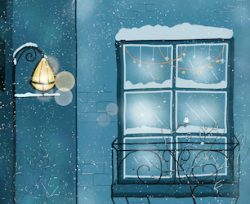 Karen Silverthorne with ‘A Hot Summer’s Night’ (287 words)
The light from the gas lamps flicker as I move through the shadows but I know these roads well. It’s been my beat since I took residence in Highgate a few years after Queen Victoria came to the throne. My home is small but comfortable, the journey to Mayfair is easy and I look forward to coming to work each evening.
I check doors and windows in Berkeley Square before heading down Curzon Street. I’m invisible to the aristocracy as they rumble by in their horse-drawn carriages, probably returning from the theatre or one of the gentlemen’s clubs on Piccadilly.
My route takes me through Shepherd’s Market where sometimes I linger, though the aroma of rotting waste and horse manure clogs my nostrils. But tonight I’m visiting a house on Grosvenor Square. The head of the household is a wealthy banker and his wife, God bless her, visits the poor. They have two handsome children: James, twenty-one years of age who has followed his father into the world of banking, and Emily, nineteen. She is betrothed to William, another banker from good stock.
I come to a halt outside the four-storey building. It’s gone midnight and apart from a light in the basement where the servants are still at work, the place is in darkness.
It’s a hot summer’s night and the windows on the upper floors are open. I’m familiar with Emily’s room. I’ve watched her sleeping, auburn hair framing her face, the lips of Cupid, the smooth curve of her neck. I flutter with excitement, swoop through the window and hover, taking in her gentle beauty. I move closer and her crystal blue eyes open, then widen as I sink my fangs into her neck.
*
HONOURABLE MENTIONS – in alphabetical order (no payment but a hearty hug for supporting this competition!)
- Darren York with ‘Gleaming The Cube’
- Jane Ricot with ‘The Watcher’
- Sandra Falconer with ‘A Thwarted Career’
- SD Spencer with ‘Detective Down Under’
- Tom Arnold with ‘Night Mare’
*
Congratulations everyone. And now some tips inspired by the entries…
- Although it’s only a small word ‘that’ – like ‘that was’, ‘which was’, and ‘who was’ – can often be chopped and over the course of a document can make a huge difference to the flow of the read (which, as an editor, is what I aim to achieve). If the remaining text makes as much sense without it, it can come out.
- Ellipses should be a one-letter series of dots, i.e. … rather than … or . . . (individual dots) and only three rather than less or more, even before the end of speech. In dialogue they’re generally used as a pause whereas the ‘en’ – dash (in British English) or ‘em’ dash — (US English) indicates an interruption. Hyphens are rarely used on their own but solely to connect words, e.g. a well-known athlete.
- For variety it’s good to mix up sentences where you have speech then narration vs narration then speech, although ending with speech makes for better paragraph and chapter endings, i.e. ‘He curled his fist. “That’s not fair!”’ works better than ‘“That’s not fair,” he shouted, curling his fist.’ Plus it avoids ‘said’/’ing’. ‘Said’ is generally invisible but the fewer ‘ing’s the better. Even too many ‘said’s become noticeable eventually.
- I’m a stickler for repetition. Try to avoid repeating words too close together. Early on one of the stories had ‘backpack’ then ‘back again’. (There were actually four ‘back’s in the story). I am a tough crowd, as the saying goes, but it was noticeable. Reading our work aloud often helps. And/or you can use tools like ProWritingAid, AutoCrit etc.
- I strongly recommend you don’t invert dialogue tags as it’s not how we would naturally speak if talking aloud, e.g. changing ‘said Tony’ to ‘Tony said’. We wouldn’t say ‘said I’ so the same applies when there’s a name rather than ‘I’. ‘said’s do tend to blur into the background so don’t try too hard to choose something else, e.g. ‘Tony postulated’, even ‘Tony exclaimed’ could be too much if we already have the likes of ‘Get out!’. If a character isn’t named (e.g. ‘a/the wo/man’ then reversing is okay the first time.
- Try to* avoid clichés where you can. Even if something’s not officially a cliché, if it’s something you know is said/used a lot in writing then try to* think of a better alternative. http://www.be-a-better-writer.com/cliches.html is a great list of 681 clichés to avoid. *‘to try and’ is often used when the verb should be ‘to try to’ do something. The two verbs go together, i.e. ‘to try to pacify’ is where someone is attempting to calm a situation. ‘to try and pacify’ would be two separate actions.
- Two of the entries were 298 words. It’s a risk to submit a story so close to the maximum. It doesn’t matter in this competition if they’re significantly below the 300-word limit but with competitions where they have a fixed limit (as my 50-word competition is) a wrongly placed dash or hyphen can tip the word count under or over and have the story disqualified.
Thanks as always to Pixabay.com for the pictures.
