 Hello everyone. I’m delighted to announce the results of the inaugural 300-word competition on the theme of ‘The Opening’. There were 14 entries from 12 writers providing a pot of £36.85 after PayPal fees.
Half of that (£18.43) goes to the Self-Pub Fest charities (see https://self-pub-fest.co.uk/charities), leaving £18.42 for the prize pot.
However, a new (anonymous) fan of short stories has promised to top up the prize portion of the pot whenever it falls below £30 so each two-month round ~ including April/May! ~ will have the following split: Winner £15 ~ Second £10 ~ Third £5.
Obviously if there are more entries than a £60 total then the entire pot will be split 50:50 as originally promised but with this guarantee it’ll hopefully mean more entries as time goes on. Please do share the main https://self-pub-fest.co.uk/300-words-a-day/competitionlink on your social media profiles/pages. Thank you!
As with most competition judging I go through each story once, slotting them where I think they may go. I often rejig when going through them in order from the ‘winner’ down to ‘highly commended’ and beyond (where there are more entries than places).
This is a writing competition so, in theory, the more polished stories fair better, wherever there’s a theme I do take this into account. Where I might place two stories equally the one closer to the theme usually has the edge. It’s also how I react to a story. If I go “wow” then the chances are that story will come in the top three, not always but often.
So the results are… <drum roll>
WINNER (receives £15) ~ John Holmes with ‘Take My Words’
The opening words flow easily between us.
 For once, at the weekly meeting, we are having a conversation beyond the simple, “How is your milkshake?”
This morning, the painful silences, usually lost in the darkness of the cinema or drowned out by the noise of a play park, are absent.
I know it’s not a real chat: it’s just the two of us reading from a script written by his drama teacher.
But we are communicating.
My son is taking the leading role of a young father, and I am responding as his dutiful son: role reversal.
He looks up from the page, then reluctantly reads the next line: “Danny, son, you know I will always love you. I will never let you down.”
He looks me straight in the eye as the word ‘love’ struggles to escape from his mouth. A word that should have been mine, not written by a teacher.
I pause before reading the response, giving myself time to go off-script.
There are no easy ways to describe what it feels like to bring the curtain down on a relationship.
My role is one I cast myself: a bit-part player, looking in from the shadows of the wings.
My hesitation causes us both deep concern: I’m worried about what I should say and he’s worried about what I could say.
Finally, I continue reading the teacher’s printed words.
It’s far easier to act that way.
*
SECOND (receives £10) ~ Robert Burns with ‘Swan Song in G Minor’
Kenneth Dale strode onto the stage of the Royal Albert Hall to thunderous applause.
This would be the finest performance by the greatest piano virtuoso in the world.
 His left hand on the Steinway-Fabbrini, Dale gave a slight bow to the audience.
Heathens all.
Tugging the bottom of his silk vest, the pianist settled at the keyboard. Hands in lap, he nodded confidently to the Maestro.
The strings began softly with the first movement.
Left hand poised to bring his piano into Prokofiev’s fiendishly difficult opening to Piano Concerto No.2 in G minor, Op. 16, Dale’s brain fogged. I can’t read the score! Which key signature am I in?
Heart pounding in his ears, Kenneth Dale’s fingers fumbled over the ivories, searching for the intoxicating piano opening envisioned by the composer. Instead, a discordant clatter exploded from the soundboard.
A collective gasp percolated through the packed house, melting into smothering silence. The orchestra stared, slack-jawed.
The virtuoso slumped on the bench.
Prokofiev would be ashamed.
Watching from the wings, Miriam raced onstage. She’d witnessed these all-too-familiar panic attacks with increasing frequency in the privacy of the practice studio – although her father never remembered them – and she’d struggled for months to keep his secret. This final concert was too important to his legacy.
Standing behind him, Miriam protectively hugged her father’s deflated frame and leaned in close, whispering, “Breathe, Daddy. I love you.”
She pecked his cheek, squeezed his tuxedoed shoulders, and exited the stage.
Kenneth Dale could sense the opening reclaiming its place in his musical brain.
The virtuoso adjusted himself at the bench and placed his hands on the keyboard in the position of G minor. With a deep breath, he smiled and nodded to the maestro.
Begin again.
Fingers danced across the keyboard.
*
THIRD (receives £5) ~ B B Elsin with ‘The Monster in the Gents’
“No! Daddy! No!” The squeal could break glass.
Heads turn. What kind of child abuse is being committed in these lavatories?
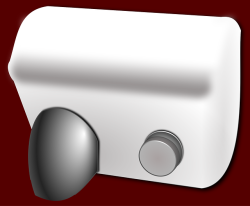 I only suggested to my dear daughter that I pick her up so that she could dry her hands in the machine. I can feel unspoken tutting and a ‘for God’s sake get that brat out of here’ mood wafting towards me.
I didn’t want to be here, but you have to take swift action when “I have to pee!” is shouted at you, and her mother is having retail therapy somewhere in the depths of TK Maxx.
“It’s just a hand drier, sweetheart. Look at Daddy. I put my hands in the opening at the top… air is blown on to my hands… and I take them out. Dry. Well, dry-ish.”
She looks up at me, horrified. “Mummy told me not to put my hands in things! My fingers might get trapped and cut off!”
“Not always—”
“It’s a monster! It roared when you put your hands in and there’s a farty smell in here. It eats people!”
I can’t help thinking that she’s now trying to wind me up, in that not very sweet way that children sometimes push their luck with their parents in public places. My little princess. She’s quite imaginative.
“Now, Ellie. That’s a bit silly. Why don’t you just try it?”
“No! Daddy! No!”
“OK. Dry your hands on your T-shirt.”
She pouts. I take one of her wet hands and lead her outside.
As the door closes, an almighty howl blows past us on fetid hot air. I quiver with panic, but Ellie doesn’t. She has the most indignant ‘I told you so!’ look on her face that I have ever seen.
*
HONOURABLE MENTIONS – in alphabetical order (no payment but a hearty hug for supporting this competition!)
- Darren York with ‘Feel the Fear’
- Karen Silverthorne with ‘Campsite Chaos’
- Neil Ridley with ‘The Unseen’
- Pete White with ‘The Opening’
- Tierney Dela Torre with ‘Till Death Do Us Deceive’
*
Congratulations everyone. And now some tips inspired by the entries…
- Although it’s only a small word ‘that’ – like ‘that was’, ‘which was’, and ‘who was’ – can often be chopped and over the course of a document can make a huge difference to the flow of the read (which, as an editor, is what I aim to achieve). If the remaining text makes as much sense without it, it can come out.
- I see a lot of ‘said’s dialogue ‘tag’s followed by ‘ing’ verbs, e.g. “Ooh it’s cold,” Joe said, wrapping the scarf around his neck. Wherever possible, just have the person doing the action, i.e. “Ooh it’s cold.” Joe wrapped the scarf around his neck. Better still, have him doing the action first so we know who’s then speaking: Joe wrapped the scarf around his neck. “Ooh it’s cold.” As it’s all in the same paragraph it’s clear who’s speaking. Where there are only two people in the scene you don’t need the ‘said’ at all because if one person’s spoken it’s a given the next speech is the other.
- I strongly recommend you don’t invert dialogue tags as it’s not how we would naturally speak if talking aloud, e.g. changing ‘said Tony’ to ‘Tony said’. We wouldn’t say ‘said I’ so the same applies when there’s a name rather than ‘I’. ‘said’s do tend to blur into the background so don’t try too hard to choose something else, e.g. ‘Tony postulated’, even ‘Tony exclaimed’ could be too much if we already have the likes of ‘Get out!’. If a character isn’t named (e.g. ‘a/the wo/man’ then reversing is okay the first time. If you have a character doing something then you don’t need the ‘said’ (or equivalent) tag – have the ‘doing’ (narration), e.g. Tony shook his head. ‘That’s not right.’. Or if we know who’s speaking – because there are only two people in a scene and the other has spoken then just have the dialogue. You can have up to three exchanges (He said/she said/he replied/she replied/he said/she said) without anything – as the reader is clever enough to keep up – before needing some narration or a ‘tag’.
- ‘just as’, meaning two things happening at the same time, or ‘just about’, almost going to do something, or a similar action, can be overused with the ‘just’ being able to be chopped in most cases.
- Like ‘erm’, we do say ‘well’ as a dialogue pause but it’s best not to include it (at least not too much) in our writing, or at the most have it as a characteristic for one of the characters. Ditto ‘look’.
- When using adverbs in description or dialogue tags, it’s usually better to use a more active verb, e.g. ‘he strode’ rather than ‘he walked purposefully’ or ‘he snapped’ instead of ‘he said angrily’. The same goes for when the characters are doing something in the general description, e.g. ‘he plodded’ instead of ‘he walked slowly’. Apart from chopping a word – always useful when you have a limited word count, it makes for a more interesting read.
Thank you again to all the entrants. They were fabulous stories. Do enter again for ‘working nights’!